
A child does not have to love every part of an orthodontic appointment to have a useful, supported experience. Knowing what will happen, being able to ask for a pause and hearing an explanation they understand can matter more than being told the visit will be “fun.”
For families considering early orthodontic treatment near D’Iberville, preparation starts with an honest conversation. This guide explains communication approaches parents can ask about, how to prepare without making unrealistic promises and what an assessment may lead to. The recommendations are general; ask the practice which arrangements it can provide for your child.
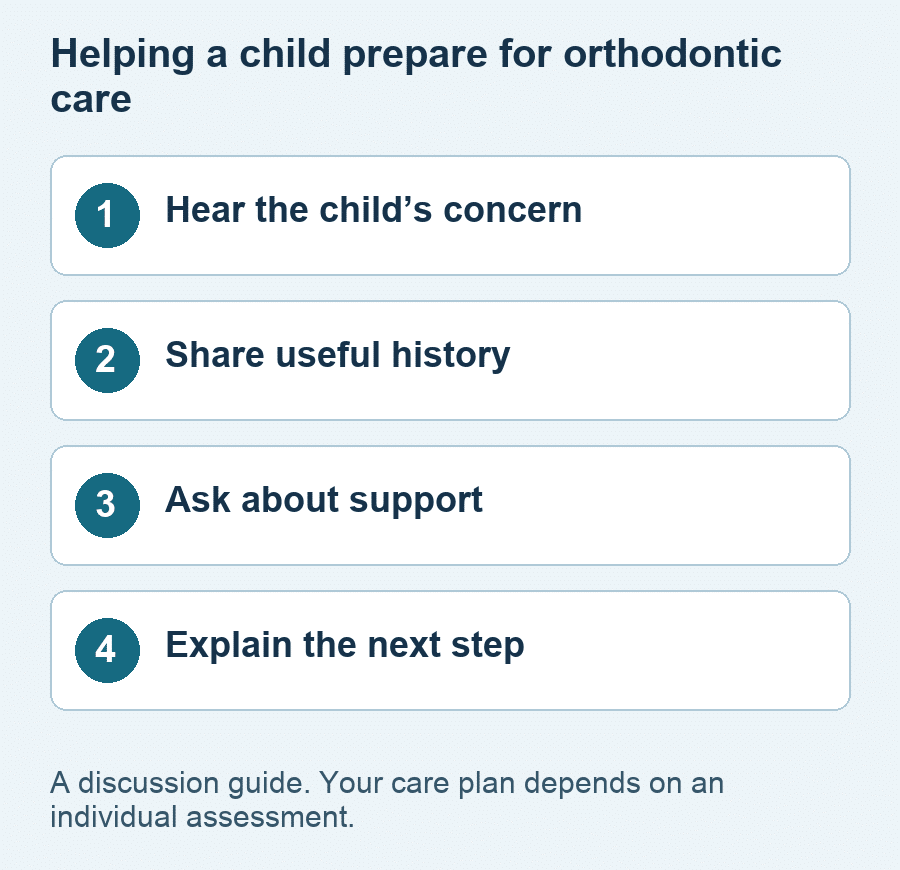
Begin with what your child already thinks
Ask what your child imagines will happen and listen before correcting them. They may be worried about a noise, a photograph, discomfort or not understanding an instruction. A specific concern is easier to discuss with the team than a general label such as “bad at appointments.”
Use calm, simple language. You might explain that the clinician will look at how the teeth are growing and how they meet. Avoid promising that nothing will hurt or that braces will definitely be fitted. Those promises may not match the appointment and can undermine trust.
Tell the practice about a previous difficult experience, communication preferences or sensory concerns before the visit where possible. This gives the team a chance to discuss suitable support and any limits on available arrangements.
Explanation can make unfamiliar steps easier
The American Academy of Pediatric Dentistry describes approaches such as tell-show-do, positive reinforcement and individualized communication in its behavior-guidance recommendations. The underlying idea is to help a child understand an appropriate step before or as it happens.
Parents can ask whether the team can explain an unfamiliar instrument, demonstrate a simple task or agree on a signal for a pause. These are questions about communication, not a claim that a particular office offers every technique or amenity.
Support should fit the child’s age, development, health and previous experiences. A technique useful for one child may be unhelpful for another. Share information and let the clinical team advise what is appropriate.
Prepare for the visit without a long rehearsal
| Child’s concern | A useful preparation idea | What to ask the practice |
|---|---|---|
| “I won’t know what they mean” | Practise asking, “Can you explain that again?” | Can instructions be given one step at a time? |
| Unfamiliar equipment | Explain that the team can describe what is needed | Can someone show the relevant item before using it? |
| Needing a pause | Discuss an agreed way to ask for a break | What signal should my child use? |
| A previous difficult visit | Share a short factual history in advance | Which parts of the visit can be adapted? |
| Sensory or communication needs | Identify useful language, triggers or comfort items | What accommodations can be arranged? |
| Worry about immediate braces | Explain that an assessment helps decide the next step | Is this visit an evaluation, records appointment or treatment visit? |
An early assessment does not always mean early braces
Orthodontic assessment looks at tooth alignment, eruption and the bite. It may lead to observation, a future review or treatment for a particular finding. It is separate from routine preventive dental care, which continues with the child’s dentist.
Ask the orthodontist to explain what they see and why the next step is recommended. If early treatment is proposed, discuss its specific goal, alternatives and limitations. Some children need later treatment even after an early phase. Do not present an appointment as a guaranteed shortcut to avoiding all future braces.
You can review Smiles by Design’s braces information before the consultation. The child’s examination determines which information applies.
Let children take an age-appropriate part
A child may be able to choose which question to ask first, describe a worry or repeat a cleaning instruction in their own words. Small opportunities to participate can help the team check understanding. They should not be asked to make decisions beyond their developmental ability or take responsibility for an adult’s consent.
Praise specific efforts, such as asking a question or practising a cleaning technique. Avoid comparing siblings or implying that fear is a failure. A child who needs more explanation is still cooperating with the process of learning about care.
If your child prefers you to help explain a concern, tell the team. If the clinician recommends a different way of communicating during a particular step, ask about the reason and how you can support it.
A six-step plan for parents
- Confirm the appointment type. Ask what is expected at this visit and how long to allow.
- Share relevant needs early. Include health history, medicines, previous experiences and communication preferences.
- Offer a simple explanation. Describe the purpose without promising a particular treatment or sensation.
- Write down two or three questions. Include one your child wants answered.
- Agree on a way to ask for help. Discuss breaks or clarification with the team rather than inventing rules on the spot.
- Review the next step afterward. Explain any monitoring, home care or follow-up in manageable language.
A comfortable routine before the visit can help: allow travel time and follow any practice-specific instructions. Do not give medicines or change a child’s routine for the appointment without appropriate guidance.
Make home care a skill-building task
If treatment begins, children may need adult help with brushing, interdental cleaning, appliance wear and supplies. Ask for a demonstration and a chance to practise. A written plan can help caregivers give consistent support.
Do not assume that a removable appliance is easier for every child or that fixed braces require no cooperation. Food precautions, cleaning, appointments and prescribed elastics all need attention. Match the plan to the child’s needs and the adults available to help.
Regular dental checkups remain important. If brushing hurts, gums bleed persistently or a component breaks, ask for advice rather than making home care a daily argument.
Keep expectations realistic
An enjoyable interaction can be helpful, but gifts, games or themed rooms are not the measure of clinical suitability. Ask about qualifications, the diagnosis, treatment choices and communication. This article does not establish that any specific entertainment or comfort service is available at the practice.
Use the consultation page to enquire about an assessment and confirm the location and arrangements appropriate for your family.
Frequently asked questions
Should I tell my child the visit will be painless?
Avoid a promise you cannot guarantee. Explain the purpose simply and encourage your child to tell the team about discomfort or uncertainty.
Does an early orthodontic visit mean braces that day?
No. The visit may lead to monitoring, further records or a discussion of options. Confirm the appointment type with the practice.
Can I ask about breaks or a hand signal?
Yes. Discuss a suitable way for your child to ask for a pause or clarification and follow the team’s instructions.
What if my child has sensory or communication needs?
Tell the practice in advance and ask which accommodations can be arranged. Support should be individualized rather than assumed.
Does the orthodontist replace our regular dentist?
No. Preventive dental care and treatment of dental disease continue alongside orthodontic assessment or treatment.