
Dental braces use fixed brackets and wires to gradually move teeth into alignment, while Invisalign uses a series of removable clear aligners to straighten teeth more discreetly. The best option depends on your case complexity, lifestyle, and treatment goals — your orthodontist can recommend the most effective solution for lasting results.
Choosing an orthodontic treatment can feel overwhelming. Braces and Invisalign each have clear strengths — different timelines, costs, comfort levels, and suitability depending on your goals. This guide walks through how each option works, expected results and timing, what treatment feels like day-to-day, and who benefits most from each approach. Read on so you can weigh your options and talk with confidence to your orthodontist.
What Are Dental Braces and How Do They Work?
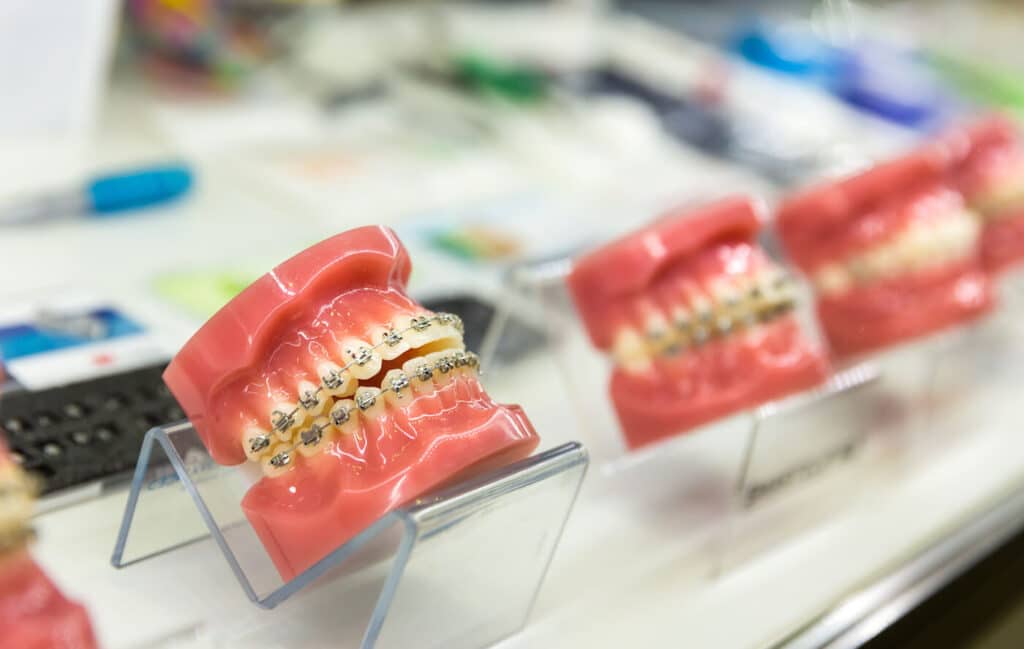
When comparing dental braces vs invisalign, braces are fixed orthodontic appliances made of brackets, wires, and sometimes bands. They apply steady, controlled forces to teeth and jaws so your teeth move into better alignment over time. Braces are versatile — they can treat everything from small spacing issues to more serious bite and jaw alignment problems.
What Materials and Types of Traditional Braces Are Available?
Traditional braces come in a few common styles, each with its own trade-offs:
- Metal Braces : Built from stainless steel, metal braces are the most visible option but are extremely effective for complex tooth movements.
- Ceramic Braces : These use tooth-colored or clear brackets to blend in with your smile and reduce visibility.
- Lingual Braces : Attached behind the teeth, lingual braces are hidden from view. They can be harder to clean and may temporarily affect speech.
Each style has benefits: metal braces are durable and powerful for tougher cases, while ceramic and lingual options prioritize a more discreet look.
How Do Braces Correct Orthodontic Issues Over Time?
Braces move teeth by applying continuous, gentle pressure. Your orthodontist will make periodic adjustments to the wires to keep that pressure consistent and guide movement. Treatment length varies with each case, but most people wear braces for about 18 to 30 months. Regular checkups ensure progress stays on track and allow your provider to fine-tune the plan.
What Is Invisalign and How Does It Compare to Braces?
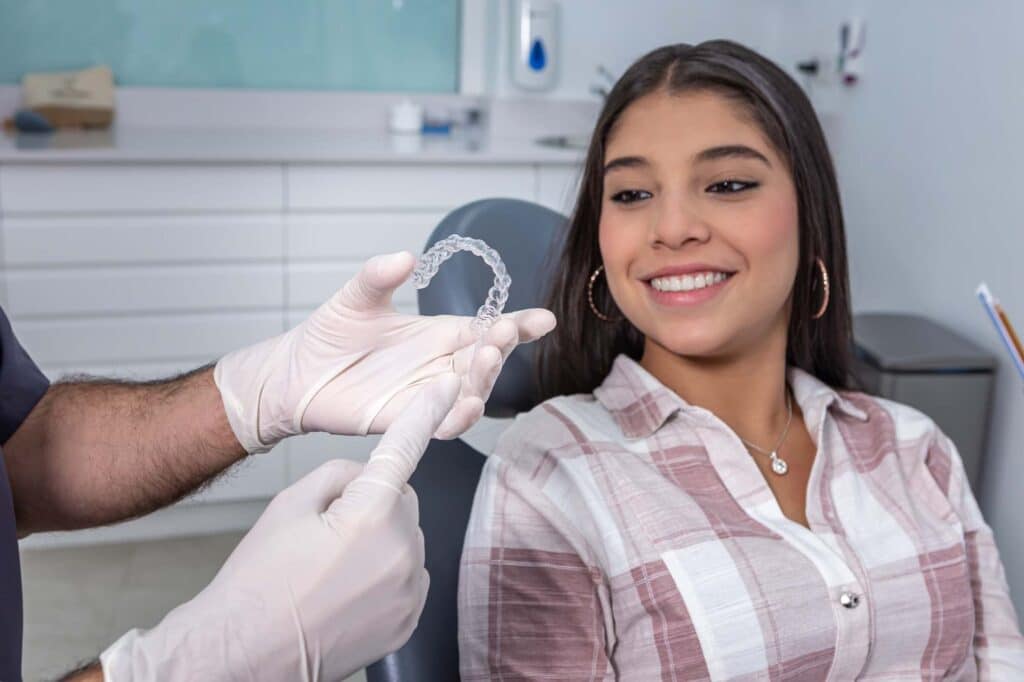
Invisalign straightens teeth using a series of custom clear aligners instead of fixed brackets and wires, making it a popular choice for those searching for dental braces vs Invisalign comparisons. The aligners are nearly invisible and removable, so many adults and teens choose them for a less noticeable option.
How Do Invisalign Clear Aligners Function for Teeth Alignment?
Invisalign aligners are precision-made from a flexible, transparent plastic that fits over your teeth. You typically wear each set for one to two weeks before moving to the next set in the series, which gradually shifts teeth into the planned positions. Because the aligners are removable, you can eat and clean your teeth without the restrictions that come with fixed braces.
What Are the Benefits of Clear Aligners Over Traditional Braces?
Compared with fixed braces, clear aligners offer several practical advantages:
- Aesthetic Appeal : The aligners are transparent and much less noticeable than metal brackets.
- Comfort : Without brackets and protruding wires, many patients report fewer sore spots and less irritation.
- Fewer Office Visits : After initial planning, patients usually change aligners at home and visit the office less frequently.
Those benefits make Invisalign a great choice for people who prioritize discretion, comfort, and convenience.
How Do Treatment Duration and Effectiveness Differ Between Braces and Invisalign?
Treatment length and effectiveness for dental braces vs Invisalign depend on the complexity of the case. Below are typical timelines and situations where one option may be preferred over the other.
What Is the Typical Treatment Time for Braces Versus Invisalign?
On average, braces take about 18 to 30 months, while Invisalign treatment commonly ranges from 12 to 18 months. Exact timing varies with the severity of the misalignment and how closely instructions are followed.
Which Option Is More Effective for Severe Orthodontic Conditions?
For complex misalignments or significant bite problems, traditional braces often provide more precise control and stronger force to move teeth. Invisalign can handle many cases but may be less suited to very severe movements or jaw corrections. A consultation with an orthodontist will clarify the best choice for your situation.
What Are the Cost Differences and Financing Options for Braces and Invisalign?
Cost is an important consideration when comparing “dental braces vs Invisalign.” Below are typical price ranges and common financing options to help you understand your treatment investment.
How Much Do Traditional Braces Typically Cost?
Traditional braces usually cost between $3,000 and $7,000, depending on case complexity and material type. Many dental insurance plans cover part of the expense, which can make treatment more affordable.
What Are the Price Ranges and Payment Plans for Invisalign?
Invisalign generally falls in the $3,000 to $8,000 range. Insurance may cover a portion, and most orthodontic practices offer flexible payment plans to spread out the cost.
| Treatment | Average Cost | Insurance Coverage | Payment Plans |
|---|---|---|---|
| Traditional Braces | $3,000 – $7,000 | Often covered | Yes |
| Invisalign | $3,000 – $8,000 | Often covered | Yes |
This side-by-side gives a quick snapshot of costs and financing options to help you compare choices.
How Do Pain and Comfort Levels Compare Between Braces and Clear Aligners?
Comfort and daily experience vary between treatments and are worth considering when choosing an option.
Are Braces or Invisalign More Painful During Treatment?
Many people find braces more uncomfortable, particularly after adjustments when the wires are tightened. With Invisalign, you may feel pressure or mild soreness when switching to a new tray, but overall patients often report less pain and irritation compared with fixed braces.
What Maintenance and Cleaning Are Required for Each Option?
Braces require careful cleaning around brackets and wires; tools like floss threaders or interdental brushes are helpful. Invisalign aligners are removable, so you can brush and floss normally — just rinse and brush your aligners regularly to avoid stains and keep them fresh.
Who Is Best Suited for Braces or Invisalign Based on Age and Dental Condition?
The right treatment depends on age, dental development, and the specific orthodontic issues to be corrected.
Can Adults and Teens Use Invisalign Effectively?
Invisalign works well for many adults and teens — especially those who have most or all of their permanent teeth. Adults often choose Invisalign for its discreet look; teens benefit from the removable design and, in teen-specific products, compliance indicators that help track wear time.
Which Orthodontic Treatment Is Recommended for Children?
For younger children — especially those whose permanent teeth are still developing — traditional braces are often the better option. Invisalign requires consistent wear and is generally recommended for older children and teens who can follow directions and have the appropriate dentition. An early evaluation with an orthodontist helps determine timing and the best path as your child grows.
In summary, both braces and Invisalign can deliver excellent results. The right choice depends on your orthodontic needs, lifestyle, and preferences.
Conclusion
Choosing between braces and Invisalign shapes your treatment experience, so it’s important to consider effectiveness, comfort, appearance, and your daily routine. Both options can deliver excellent results when tailored to the right case under the guidance of Dr. Austin Rahaim at Smiles By Design Orthodontics. Our team provides individualized recommendations and step-by-step guidance to help you achieve the best possible outcome for your smile, offering both traditional braces and Invisalign solutions customized to your goals. When you’re ready, schedule a consultation with Dr. Rahaim so we can evaluate your needs and create a clear, personalized treatment plan.
Schedule your appointment today to take the first step toward a healthier smile. You can contact us at (228) 400-2100 for our D’Iberville location or (228) 467-2211 for our Bay St. Louis location for more information and to book your visit.
Frequently Asked Questions
What Factors Should I Consider When Choosing Between Braces and Invisalign?
Think about the severity of your orthodontic issues, how visible you want the treatment to be, and how disciplined you are about wearing removable aligners. Braces are often the more reliable choice for complex cases; Invisalign is a strong option for mild to moderate problems and for people who want a low-profile treatment. A consultation will help match your goals with the right approach.
How Often Do I Need to Visit the Orthodontist During Treatment?
Patients with traditional braces usually come in every 4 to 8 weeks for adjustments and monitoring. Invisalign patients typically check in every 6 to 8 weeks, since they change aligners at home between visits. Regular appointments are important for tracking progress and addressing any concerns.
Can I Eat Normally with Braces and Invisalign?
With braces, you should avoid hard, sticky, or crunchy foods (like hard candies, popcorn, and chewy sweets) that can damage brackets or wires; cutting food into smaller pieces helps too. Invisalign aligners are removable, so you can eat your usual foods — just remove the trays and brush before putting them back in to keep your teeth and aligners clean.
What Happens If I Lose or Break an Invisalign Aligner?
If an aligner is lost or damaged, contact your orthodontist as soon as possible. They may instruct you to wear the previous set until a replacement arrives or provide a new tray to keep your treatment on schedule. Avoid skipping a step in the sequence, since missed aligners can delay progress.
Are There Any Age Restrictions for Using Invisalign?
Invisalign is appropriate for most adults and many teens, but it generally requires a full set of permanent teeth. Younger children are usually better candidates for braces. Your orthodontist can assess dental development and recommend the right timing and product.
How Do I Maintain Oral Hygiene with Braces and Invisalign?
Good hygiene is essential with any orthodontic treatment. With braces, use tools like floss threaders and interdental brushes to clean around brackets and wires, and brush carefully after meals. With Invisalign, you can brush and floss normally, and should clean your aligners daily to prevent staining and odors. Follow your orthodontist’s instructions to keep your smile healthy through treatment.