
Content reviewed by Dr. Austin Rahaim, board certified orthodontist at Smiles By Design Orthodontics in Bay St. Louis, MS.
Yes, you can almost always get Invisalign if you have a dental crown. A crown does not disqualify you from clear aligner treatment, and for most patients it changes very little about how the plan comes together. Dr. Austin Rahaim treats plenty of Bay St. Louis patients who have one or more crowns, and Invisalign moves a crowned tooth the same way it moves a natural one. The details that matter are where the crown sits, how it is shaped, and whether an aligner attachment needs to grip it. This guide walks through all of it.
Key takeaways
- A dental crown does not stop you from getting Invisalign. Clear aligners move crowned teeth and natural teeth alike.
- The crown itself does not shift. The tooth root underneath moves, and the crown travels with it.
- Attachments (small tooth colored bumps that help aligners grip) can be placed on a crown, though they bond a little differently than they do to enamel.
- Timing matters. If you need a new crown, it is often smarter to finish orthodontic movement first so the crown fits your final bite.
- Want a clear answer for your own mouth? Book a free consultation online or call our Bay St. Louis office at (228) 467-2211.
What is a dental crown, and why do patients worry about it?
A crown is a custom cap that covers a damaged, cracked, or heavily filled tooth to restore its shape and strength. As the Cleveland Clinic explains, a crown fully surrounds the visible part of the tooth and is bonded in place, which is why it can feel permanent and separate from the rest of your smile. That separateness is where the worry starts. Patients assume that because a crown is artificial, an aligner cannot push on it, or that pressure might pop it off. Neither is true in most cases. The crown is fixed to a living tooth with a real root in real bone. When Invisalign applies gentle force, the root moves through the bone, and the crown simply comes along for the ride.
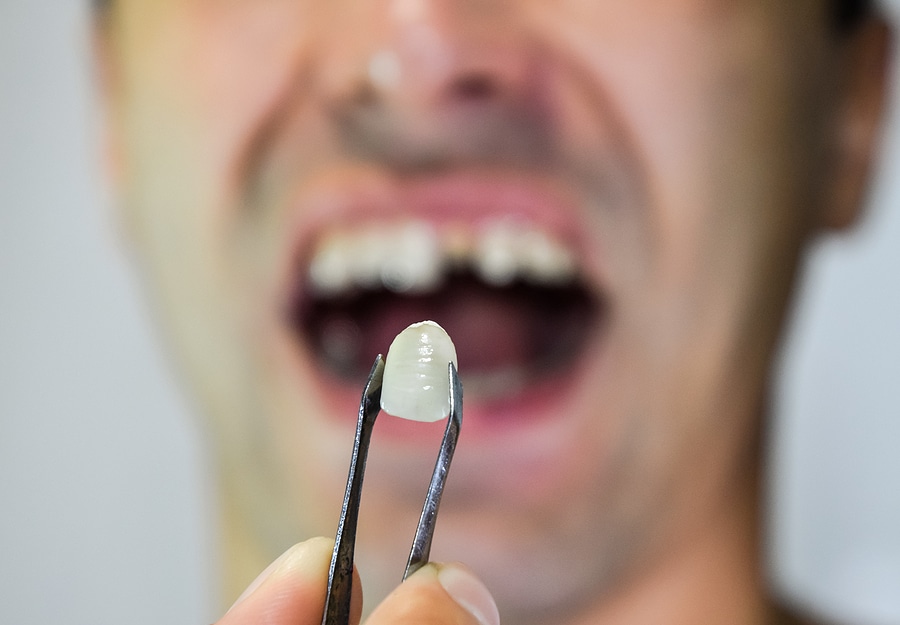
Can you get Invisalign with a crown? The honest answer
For the large majority of patients, yes. Invisalign treatment plans routinely include teeth that carry crowns, bridges are the bigger exception, and Dr. Rahaim accounts for existing dental work when he maps out your movement. A single crown, a few crowns, even a crown on a front tooth are all workable. A few situations call for extra planning:
- A very new crown. If you just had a crown placed, tell your dentist and orthodontist. Fresh cement needs time, and the crown was shaped for your current bite, not your future one.
- A crown on a tooth that needs an attachment. Attachments grip enamel best. On a smooth porcelain crown, the bond is slightly weaker, so Dr. Rahaim may adjust the plan or lightly prepare the surface.
- An implant restoration. An implant crown does not have a root that moves through bone, so it stays put. Aligners then move the teeth around it. This is common and manageable, it just changes the strategy.
The takeaway from the American Association of Orthodontists applies here: only a hands-on exam tells you exactly how your case behaves. A crown rarely changes the answer, but it can change the details.
How does Invisalign move a crowned tooth?
Invisalign works through a series of clear trays, each one shaped slightly differently from the last. When you wear a tray, it presses on your teeth and nudges them a small amount toward their target position. You swap to the next tray every week or two, and the movement adds up. A crowned tooth responds to that pressure the same way a natural tooth does, because the force acts on the root, not the cap. The one technical wrinkle is the attachment. Attachments are small tooth colored bumps bonded to certain teeth so the aligner has something to push against for trickier movements like rotations. Porcelain is slick, so an attachment on a crown holds a little less firmly than one on enamel. Dr. Rahaim plans around this by choosing attachment placement carefully and, when needed, gently roughening the crown surface so the bond takes.
Invisalign vs. braces when you have a crown
Both Invisalign and braces can treat patients with crowns. The right choice depends on your case, not your dental work. Here is how they compare when a crown is in the picture.
|
Factor |
Invisalign with a crown |
Braces with a crown |
|---|---|---|
|
How force is applied |
Trays press on the whole tooth; attachments help with tough moves |
Brackets bond to each tooth, including the crown |
|
Bonding to porcelain |
Attachments hold slightly less than on enamel |
Brackets also bond less firmly to porcelain and may need surface prep |
|
Visibility |
Nearly invisible trays |
Visible brackets and wires (clear brackets available) |
|
Best for |
Mild to moderate crowding, spacing, and bite issues |
Complex bites and cases needing heavy force |
|
Removable |
Yes, for eating and brushing |
No, fixed for the full treatment |
If you are weighing your options, our Invisalign page and broader orthodontic treatments overview lay out what each path involves. Healthline’s Invisalign guide is a solid neutral primer if you want to read more before your visit.
Am I a candidate for Invisalign if I have a crown?
Most teens and adults with healthy teeth and gums are candidates, crown or no crown. Good candidates usually have:
- Mild to moderate crowding, spacing, or bite concerns
- Healthy gums and no active, untreated decay
- Crowns that are stable and well fitted
- Realistic goals and the discipline to wear trays 20 to 22 hours a day
If a crown is loose, failing, or sitting on a tooth with gum trouble, Dr. Rahaim will usually want that addressed first so aligners start on a healthy foundation. The same goes for cavities anywhere in the mouth.
What happens during treatment? A step by step look
Here is what a typical Invisalign course looks like at Smiles By Design when a crown is involved.
- Free consultation and 3D scan. Dr. Rahaim examines your bite, reviews every crown and restoration, and takes a digital scan of your teeth. No goopy impressions.
- Custom plan. Using the scan, he maps how each tooth needs to move, notes which crowns will carry attachments, and estimates your timeline and cost.
- Attachments and first trays. If your plan calls for attachments, they are bonded on, including any on crowns, and you receive your first set of aligners.
- Progress at home. You wear each tray for the recommended time, then move to the next, checking in for periodic reviews.
- Retention. Once your teeth reach their target, a retainer holds them there so they do not drift back.
Should you get a crown before or after Invisalign?
Timing is the question dentists most want patients to ask. If you already have crowns, you generally go straight into Invisalign. If you know you need a new crown, it is often better to finish the orthodontic movement first. Here is why: a crown is built to fit your bite the day it is made. If your teeth then shift into a new position, a crown made beforehand may no longer meet the opposing tooth correctly. Straightening first, then crowning, lets your dentist build the restoration to your final bite. Dr. Rahaim coordinates this sequencing with your general dentist so the two treatments do not work against each other. General crown care basics, covered by the ADA, still apply throughout.
Why choose Smiles By Design for Invisalign in Bay St. Louis?
Dr. Austin Rahaim is a board certified orthodontist with training from Louisiana State University, Nova Southeastern University, and the University of Tennessee, and Mississippi roots that keep him close to the Gulf Coast community. At Smiles By Design, every case starts with a free consultation and a digital scan, so your plan is built around your actual mouth, crowns included. The practice also accepts Medicaid, offers flexible payment plans, and helps you sort out insurance before you commit. Our Bay St. Louis office serves patients from Bay St. Louis, Picayune, and the wider Mississippi Gulf Coast. You can learn more about the Bay St. Louis location or start with a free consultation. Office and contact:
- Bay St. Louis: 101 Reese St., Bay St. Louis, MS 39520
- Phone: (228) 467-2211
- D’Iberville office: 3149 Mallett Road, D’Iberville, MS 39540, (228) 400-2100
- Book online: smiledesigns.net/schedule-free-consultation
Frequently Asked Questions
Can you get Invisalign if you have a crown?
Yes. In most cases a crown does not affect your eligibility. Invisalign moves the tooth under the crown the same way it moves a natural tooth.
Will Invisalign damage my crown?
No. The aligner presses on the whole tooth and the root moves through the bone, so a well fitted crown is not harmed or loosened by normal treatment.
Can an Invisalign attachment go on a crown?
Yes, though attachments bond less firmly to porcelain than to enamel. Dr. Rahaim plans placement carefully and may lightly prepare the surface for a stronger hold.
Does Invisalign work if I have a crown on a front tooth?
Yes. A front tooth crown is treated like any other tooth in the plan. Because the trays are clear, treatment stays discreet either way.
What if my crown is on a dental implant?
An implant crown does not move because it has no natural root in bone. Aligners then shift the surrounding teeth around it, which is a common and workable situation.
Should I get a new crown before or after Invisalign?
Usually after. Finishing orthodontic movement first lets your dentist build the crown to your final bite so it fits correctly.
Can braces work better than Invisalign with a crown?
Not necessarily. Both handle crowns. The better option depends on the complexity of your case, which Dr. Rahaim assesses at your consultation.
Do I need my dentist and orthodontist to coordinate?
For timing of new crowns, yes. Smiles By Design works with your general dentist so restorative and orthodontic care line up.
How long does Invisalign take if I have crowns?
Crowns do not add a fixed amount of time. Your timeline depends on how much your teeth need to move, and Dr. Rahaim gives you an estimate after your scan.
How do I find out if I am a candidate?
Book a free consultation at Smiles By Design in Bay St. Louis by calling (228) 467-2211 or scheduling online.
Ready to ask about Invisalign with a crown?
A crown should not keep you from the smile you want. The only way to know exactly how your case works is a hands-on look at your teeth and existing dental work. Dr. Austin Rahaim will review every crown, explain your options in plain language, and give you a real timeline and cost. Request your free consultation or call Smiles By Design in Bay St. Louis at (228) 467-2211.